Follow the aftercare instructions provided for your treatment. Temporary redness or sensitivity can occur, but severe, worsening, or unexpected symptoms need assessment. Be gentle with the area, protect it from sun exposure, and ask when your usual skincare, exercise, and hair-removal routine can safely resume.
Leave with instructions and a contact route
Before you leave the appointment, ask what reactions are expected, how long they may last in your case, and whom to contact if you are unsure. Written instructions are helpful because it is easy to forget details while discussing the next session or payment arrangements.
Make sure you know what to do outside normal business hours if a significant problem develops. You do not need to decide whether something is definitely a complication before seeking advice. Describing the symptom and its progression allows the treating professional to guide you.
Keep the first routine simple
Treat the skin gently and use only the products recommended for your situation. Avoid trying several new creams at once to make redness disappear faster. If the provider recommends cooling, follow the method given rather than placing ice directly against the skin or improvising prolonged cold exposure.
Questions about makeup, deodorant, moisturizer, acids, retinoids, and fragrance are worth asking explicitly. Different areas and skin responses can call for different instructions. A facial treatment and a back treatment do not necessarily return to the same product routine at the same time.
Exercise, hot showers, and friction
Ask when to resume activities that produce heat, sweating, or rubbing over the treated area. Your provider may advise a temporary pause, but the exact instructions should reflect your treatment and response. Do not turn a generic number of hours from social media into a rule that overrides irritation.
Think through your next day before the appointment. Tight sportswear, a long outdoor shift, a sauna visit, or a strenuous workout may affect how easy it is to follow the plan. Scheduling with those activities in mind is simpler than trying to work around discomfort afterward.
Protect skin from sun exposure
Follow guidance about shade, protective clothing, and sunscreen. Sun protection is not just a beach-day issue; exposed arms, legs, or facial skin can receive sun during ordinary routines. Tell the provider if travel or outdoor work makes protection difficult so you can plan realistically.
Do not treat sunscreen as permission to tan immediately after a session. Our summer and tanning guide explains why changing skin color and sunburn deserve attention before the next appointment too. Report a new tan rather than assuming your prior settings still apply.
Understand shedding without trying to force it
Treated hairs may shed over time. That process can look different from the instant smoothness you associate with waxing. Avoid picking, pulling, or aggressive exfoliation to make hairs come out faster, particularly while the skin is sensitive.
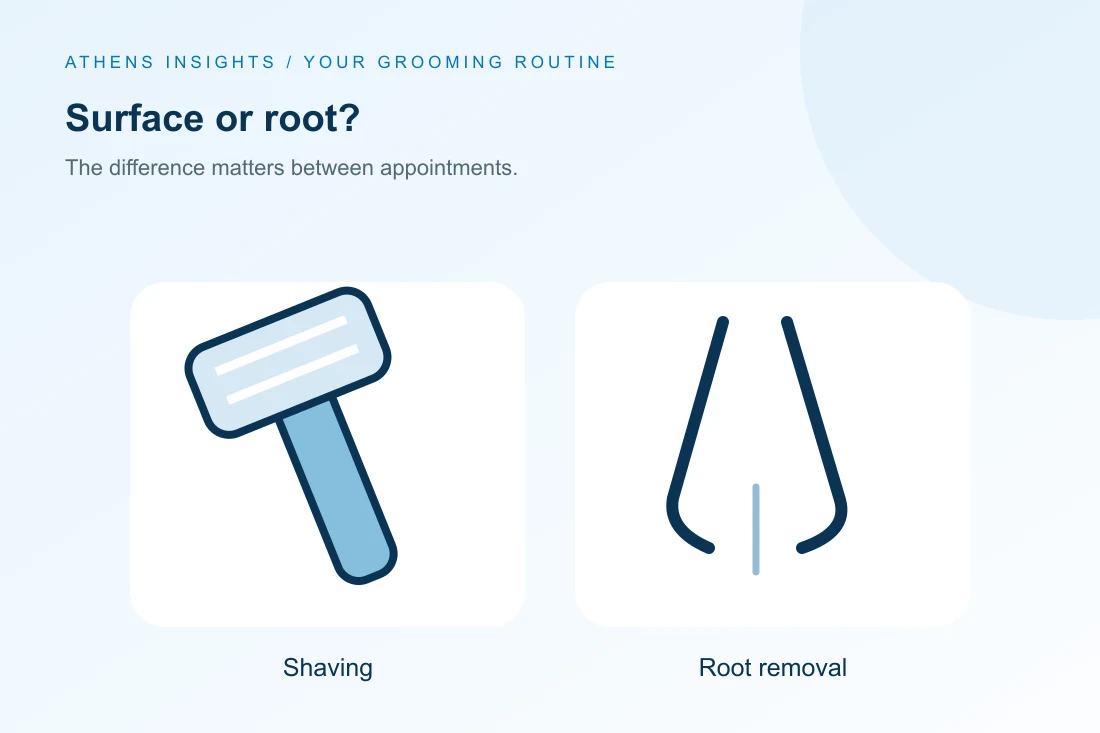
Ask when shaving is appropriate for your area and response. If you are unsure about a patch that appears to keep growing, raise it at follow-up rather than using wax or an epilator. The between-session hair-removal guide explains why removing hair from the root can interfere with planning.
Warning signs deserve prompt attention
Contact the treating professional for blistering, broken skin, significant swelling, severe or worsening pain, or concerning pigment changes. Signs of infection should be assessed promptly. Eye pain or visual changes require urgent medical attention rather than waiting for a routine follow-up.
Do not apply harsh home remedies to a suspected burn or assume that every reaction is normal shedding. If you document the area, note when the symptoms began and whether they are improving or worsening. Share relevant photographs privately with the clinician, not as a substitute for assessment.
Use follow-up to improve the next appointment
Keep a brief record of your response and any questions. Note changes in skincare, medication, sun exposure, or hair pattern before the next visit. Your next session should include an opportunity to review that information, not simply repeat the last appointment without discussion.
Our safety guide explains the screening questions that remain relevant throughout a course. Reporting a reaction is useful feedback; it is not an admission that you did something wrong.
Your care plan comes first
Athens Laser Hair Removal provides personalized consultations at its Allen clinic. Ask for instructions specific to your area and treatment, and keep the clinic's contact details accessible. This educational guide cannot evaluate a skin reaction remotely or replace individualized medical advice when something concerns you.
Sources & further reading
Clinical background for this guide. These organizations do not endorse Athens. Individual advice from your treating professional takes priority.
General education—not an individual diagnosis, treatment clearance, or substitute for medical advice. No independent clinical review is claimed. For personal suitability, speak with your treating professional.