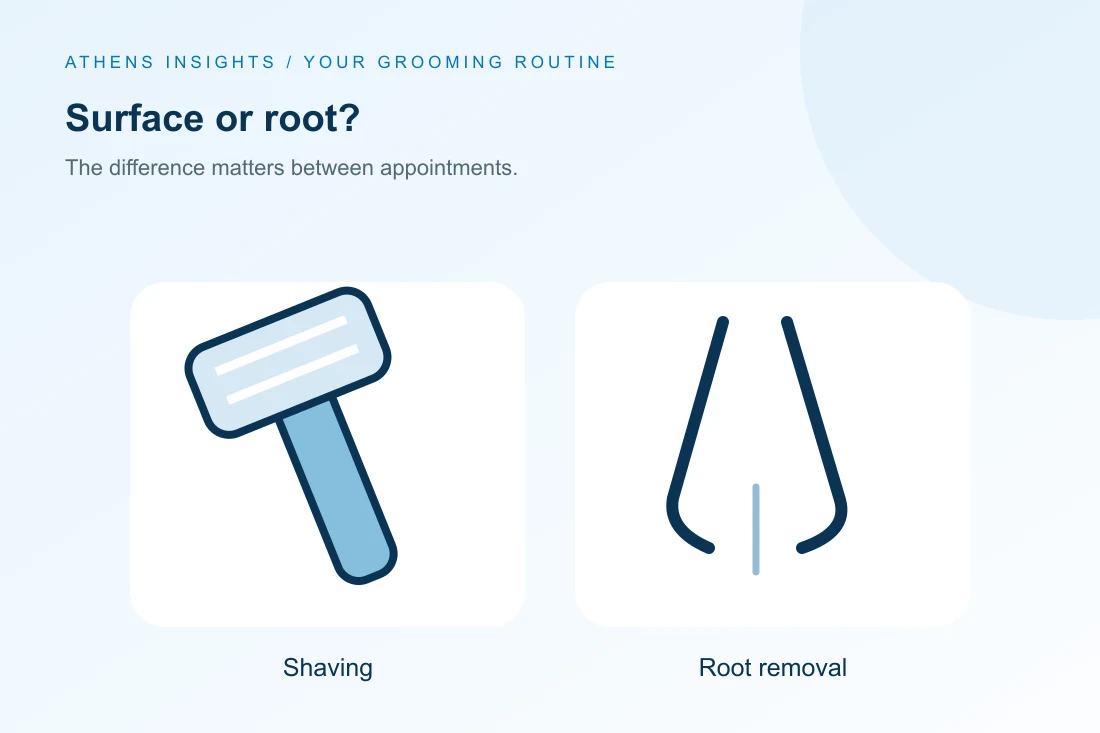
Shaving cuts hair at the surface; waxing, tweezing, threading, and epilating remove it from the root. That difference matters during laser treatment because the hair provides a pigment target. Follow your clinic's timing instructions and ask before using another removal method between sessions.
Why the method matters more than how smooth it looks
Two hair-removal methods can leave skin looking similar while doing very different things beneath the surface. A razor trims the visible shaft. Waxing or tweezing pulls hair out. For laser planning, the aim is not simply the smoothest-looking skin on appointment day; it is preparation that supports appropriate treatment.
This is why a clinic may ask you to shave while avoiding root-removal methods for a period before and during a course. Ask for the timing that applies to your area. Do not assume the instructions for a friend's legs automatically apply to your face or another area.
Can you shave between sessions?
Shaving is commonly used between laser appointments, once the skin is ready and according to the clinic's instructions. If the area remains irritated, do not repeatedly shave it in an effort to stay perfectly smooth. Contact the provider about when and how to resume your routine.
Use a gentle approach that does not create cuts or aggravate a rash. If shaving is difficult because of the location or your skin's response, explain that before the next visit. The provider may need to discuss a practical preparation plan rather than assume everyone can shave every area easily.
Why waxing and tweezing can disrupt the plan
Removing hairs from the root changes what is available for a pigment-targeting treatment. That can make the timing of your next session less straightforward. Tell the clinic if you have waxed, tweezed, threaded, or used an epilator; do not keep the appointment unchanged without mentioning it.
If you already used one of those methods, the next step is a conversation, not panic. Explain which area was treated and when. The provider can decide whether the appointment should be adjusted. Avoid trying to “fix” the situation by aggressively exfoliating or treating the area with a home device.
What about depilatory creams?
Hair-removal creams have product-specific instructions and can irritate skin. Do not assume they are interchangeable with shaving during a laser course. Ask the clinic before using one, especially if the area is sensitive, recently treated, or already affected by other skincare products.
If a cream causes a reaction, stop using it according to its directions and seek appropriate advice. Tell the laser provider before the next session. Skin that looks irritated needs assessment even if the unwanted hair has been removed successfully.
Do not pull at shedding hairs
After laser treatment, hairs may shed over time. Resist the urge to pull them out to test whether treatment worked. Picking or forceful exfoliation can irritate skin and makes it harder to judge an uncomplicated recovery.
Ask what shedding may look like for your area and when you should raise concerns about persistent growth. Our aftercare guide explains the difference between gentle care and trying to accelerate the process. A visible hair shortly after treatment is not enough information to declare the course unsuccessful.
Plan for everyday grooming needs
If you shave daily for work, maintain a beard line, or have an upcoming event, tell the practitioner. Your routine should be part of the plan from the beginning. That is especially important when treatment boundaries affect a hairstyle or beard shape you may want to change later.
Write down the agreed boundaries and preparation instructions. For hard-to-reach areas such as the back, ask what help or preparation is appropriate rather than arriving with irritated skin from an awkward last-minute attempt.
A useful conversation before each appointment
- Which methods have I used since the previous session?
- Did shaving cause irritation, cuts, or bumps?
- Have I applied a new cream, acid, retinoid, or other product?
- Is the skin fully settled, or is something still uncomfortable?
- Do I need different preparation instructions for the next area?
These details help the provider assess the current situation. They are more useful than reporting only that you followed the schedule.
Keep grooming aligned with the course
At your Athens consultation in Allen, discuss both treatment goals and the routine you need between visits. Review the preparation checklist and session-planning guide so shaving instructions make sense within the larger plan. The aim is a manageable course of treatment, not a set of grooming rules disconnected from daily life.
Sources & further reading
Clinical background for this guide. These organizations do not endorse Athens. Individual advice from your treating professional takes priority.
General education—not an individual diagnosis, treatment clearance, or substitute for medical advice. No independent clinical review is claimed. For personal suitability, speak with your treating professional.