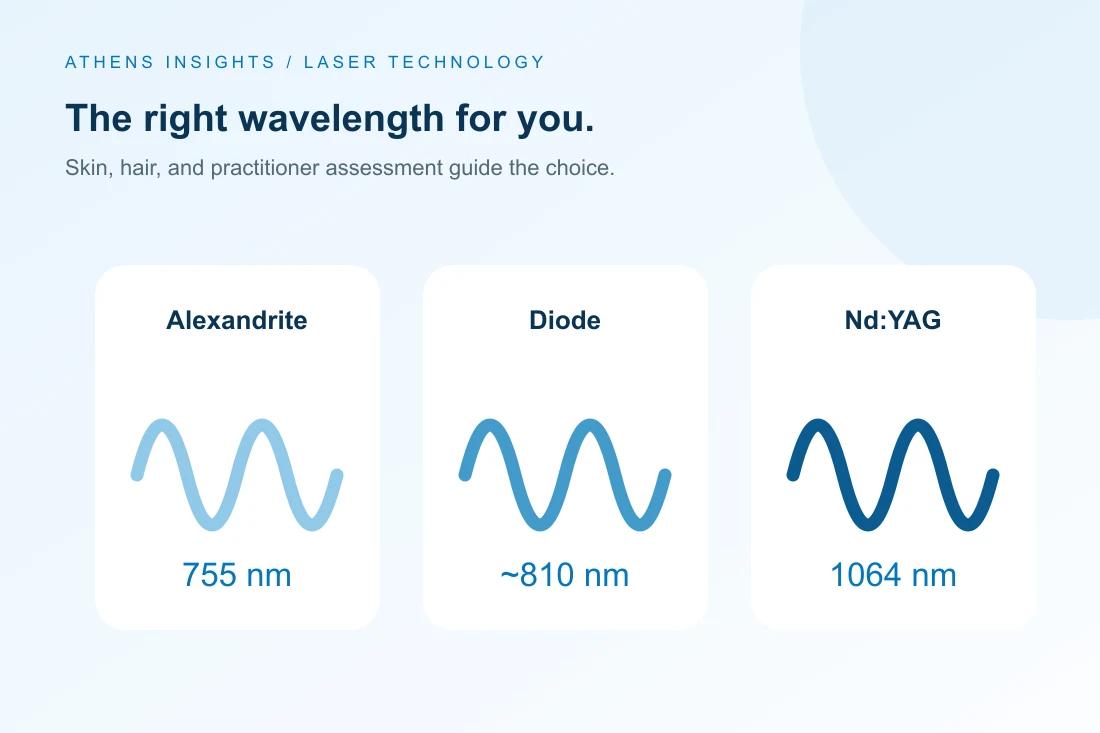
Laser hair removal can be an option for darker skin when the device, settings, cooling, and practitioner experience are appropriate. Long-pulsed Nd:YAG is commonly considered for darker tones. Your natural skin color, current tanning, hair characteristics, and history still require an individual assessment.
Darker skin is not a single treatment category
People with darker skin have different tones, hair patterns, sensitivities, and histories of pigmentation changes. A broad label cannot capture all of those details. The provider should assess the actual area, not assume that a photograph or a checkbox is enough to choose a plan.
Tell the practitioner about previous dark marks after acne, burns, waxing, or other procedures. Also describe earlier laser treatments, including any reactions and what you know about the equipment. That history can help frame a more useful discussion than simply asking whether the clinic treats “all skin types.”
Why wavelength matters
Laser hair removal targets pigment in suitable hair, but the skin contains pigment too. The aim is to affect the follicle while protecting surrounding skin. For darker skin, long-pulsed 1064-nanometer Nd:YAG is often an important option because of how that wavelength interacts with pigment.
This is not a reason to select treatment settings yourself or assume that a wavelength guarantees safety. The provider must consider the complete treatment. Our laser technology comparison explains the main categories without ranking one as universally best.
Ask about experience with skin like yours
A device advertisement cannot tell you how a practitioner assesses risk or follows up after treatment. Ask about their experience with your skin tone and the area you want treated. Request an explanation of the process for monitoring response and deciding whether a session should be adjusted or postponed.
If a test area is proposed, ask what it can help assess and when it will be reviewed. A small test may provide useful information, but it is not a promise that an entire course will be free of reactions. Continue reporting changes at every appointment.
Natural skin tone and a recent tan are different issues
Having naturally darker skin does not make recent tanning irrelevant. New sun exposure or a change in skin color should be discussed before treatment. Tell the clinic about outdoor activity, travel, sunburn, and self-tanning products rather than guessing whether they matter.
In North Texas, ordinary routines can create substantial exposure: outdoor sports, pool days, yard work, and commuting with exposed arms. Our summer and tanning guide helps you plan around real life without suggesting that a particular calendar month is automatically safe.
Know what to watch for afterward
Ask for written aftercare and a clear contact route. Temporary redness or follicular swelling may occur, while burns, blistering, and changes in pigmentation are possible complications. Be specific when reporting a concern: when it began, whether it is worsening, and what the skin feels like are useful details.
Do not aggressively scrub a dark mark or apply a new lightening product to a fresh reaction without professional advice. Seek prompt assessment for blistering, broken skin, severe pain, or suspected infection. Eye symptoms need urgent medical attention. Our safety guide provides a fuller consultation checklist.
Hair characteristics still affect the result
Appropriate skin matching does not make white, gray, very light, or fine hair an equally good laser target. Ask the practitioner to identify which hairs are likely to respond and which may remain. This is especially important when evaluating facial hair or a mixture of dark and gray growth.
Define what success would mean for you before buying a package. Less frequent shaving, reduced coarse growth, and a cleaner treatment boundary are different goals. Clear expectations make it easier to assess whether the proposed method matches the problem you actually want to solve.
Your Athens consultation
Athens uses the Cynosure Apogee Elite system with Alexandrite and Nd:YAG options at its Allen clinic. Ask which approach is being considered for your skin and hair, what preparation is required, and how progress will be reviewed. The consultation is an opportunity to assess suitability, not an obligation to begin treatment.
Bring a medication list, recent skincare changes, previous treatment details, and questions about pigmentation. If you are visiting from Plano, Frisco, McKinney, or nearby communities, mention any scheduling or sun-exposure constraints so the plan fits the way you actually live.
Sources & further reading
Clinical background for this guide. These organizations do not endorse Athens. Individual advice from your treating professional takes priority.
General education—not an individual diagnosis, treatment clearance, or substitute for medical advice. No independent clinical review is claimed. For personal suitability, speak with your treating professional.