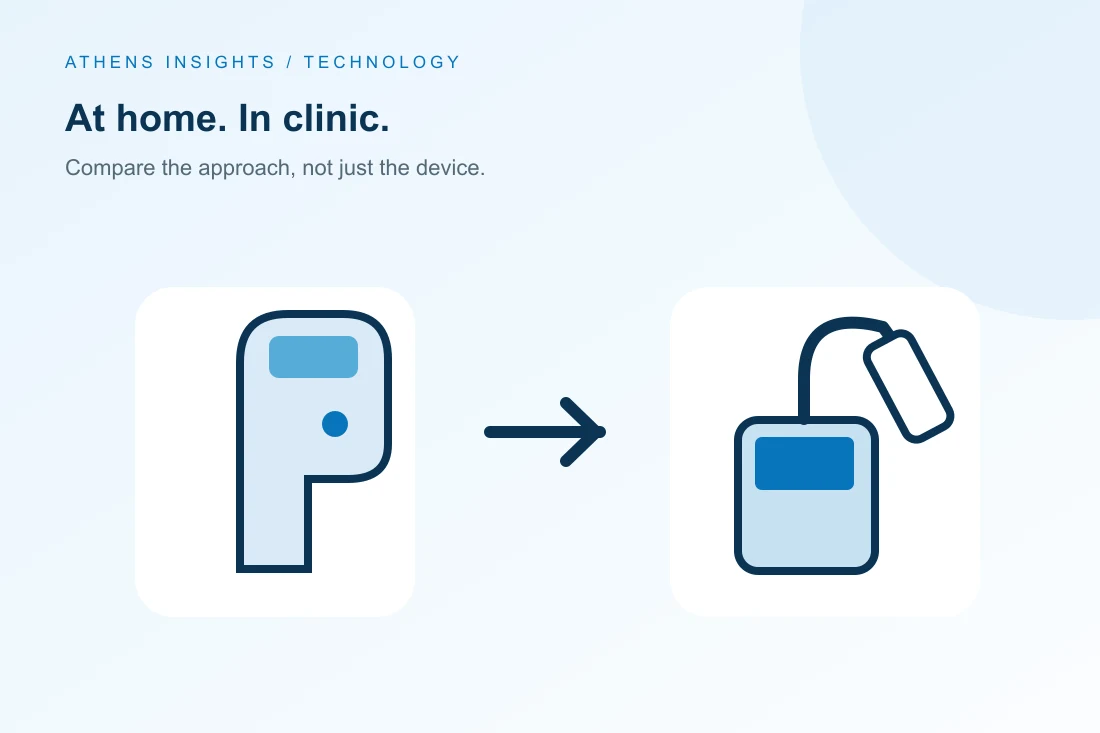
Professional laser treatment and at-home IPL are different approaches to hair reduction. Their technology, instructions, supervision, and suitability can differ substantially. Compare your actual skin, hair, treatment area, and ability to follow a plan—not just the purchase price of a device versus one clinic appointment.
Understand the words on the box
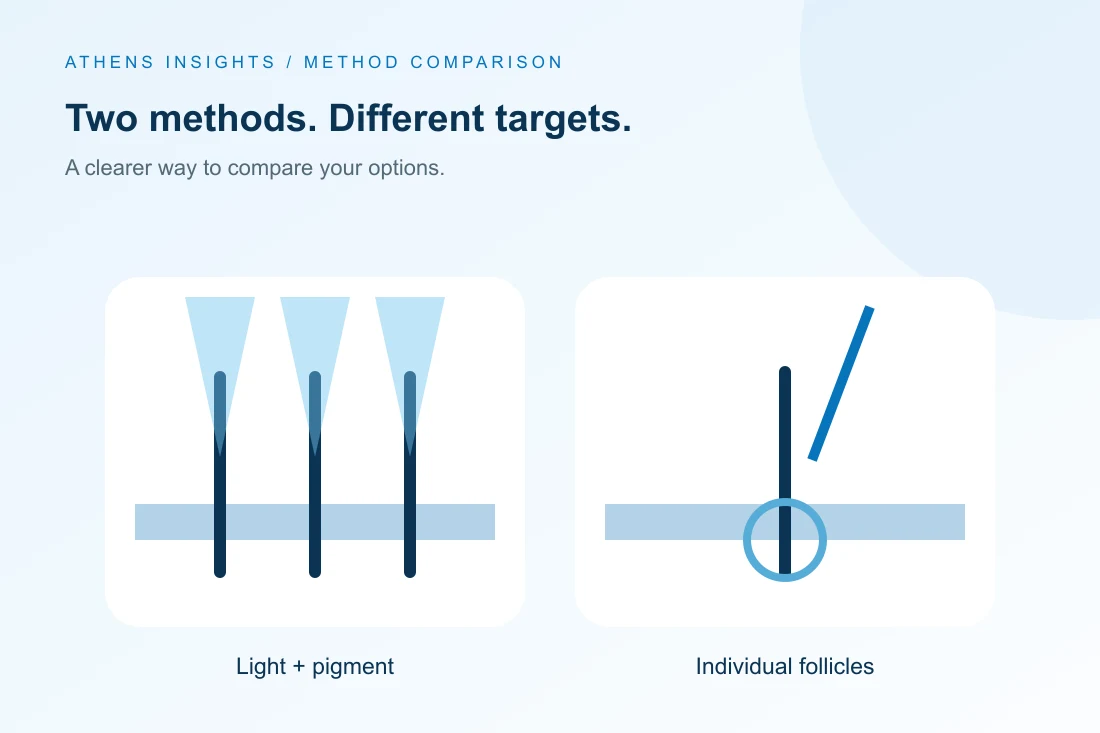
IPL means intense pulsed light. It uses a broad spectrum of light, while a hair-removal laser uses a specific wavelength. Some home products are IPL devices and others use different technology, so read the actual product information rather than assuming “home laser” always means the same thing.
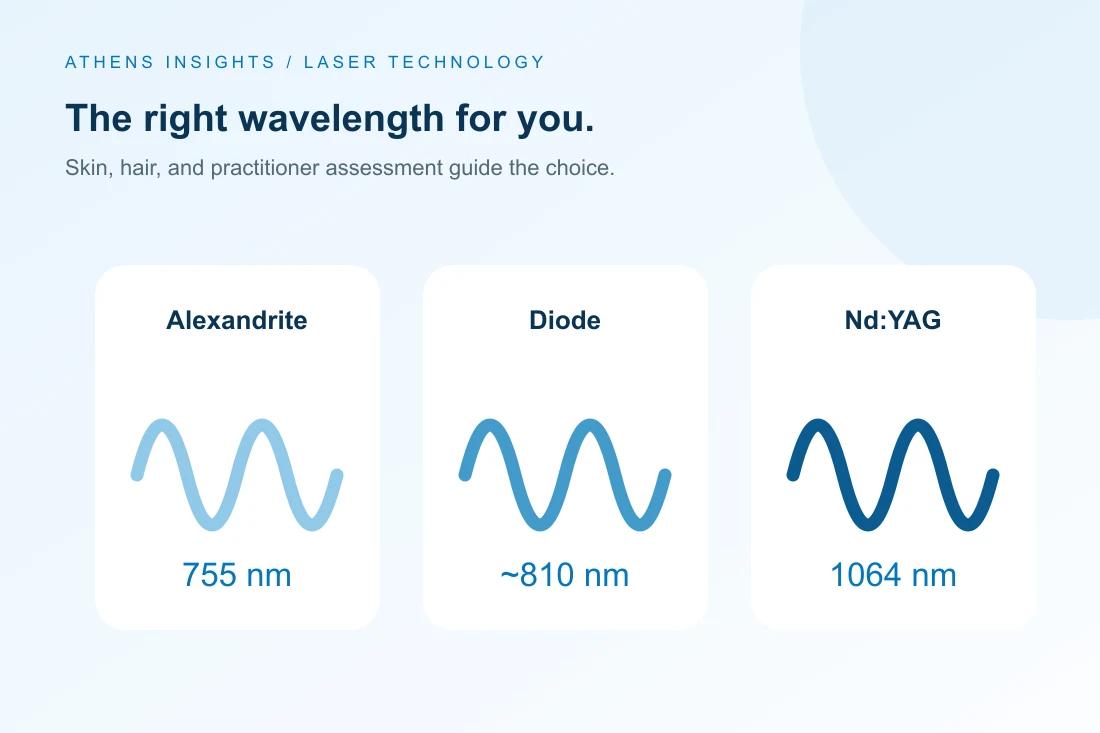
Professional treatment also varies by device. Ask what a clinic uses and why it would suit you. Our Alexandrite, diode, and Nd:YAG guide explains those categories. A comparison becomes more useful once you know which two approaches you are actually comparing.
Suitability comes before convenience
A home device's skin-tone and hair-color chart is a compatibility restriction, not a decorative suggestion. Read the current instructions for the exact model, including excluded areas, health considerations, and any skin-sensing features. Do not try to defeat a sensor or use a device beyond the manufacturer's stated limits.
If you are uncertain about suitability, ask a qualified professional before proceeding. A bargain device is not a good value if your hair lacks a suitable target or your skin falls outside its permitted use. Reviews from people with different skin and hair cannot resolve that question for you.
Professional care includes assessment and follow-up
In a clinic, the consultation and ongoing assessment are part of the service. You can discuss treatment boundaries, previous reactions, medications, changing skin conditions, and what progress would look like. Ask how the practitioner monitors response and handles an unexpected reaction.
That supervision does not make professional treatment risk-free or guarantee results. It does change who evaluates the plan and who you contact with concerns. See our laser safety guide for practical questions to ask before deciding where to be treated.
Home treatment requires a realistic routine
Consider whether you can follow the device instructions consistently and accurately. Can you reach the area? Can you see the skin clearly? Will you track sessions without repeating treatment too soon? Are there tattoos, irritated patches, or other boundaries you might overlook?
Convenience is personal. Treating at home may reduce travel, but it also transfers more responsibility for preparation, coverage, scheduling, and recognizing problems to you. A large area that is difficult to reach can be a very different project from a small, easily visible one.
Compare total commitments, not isolated prices
A home device's upfront cost and a clinic's single-session price are not equivalent units. Consider the complete course, likely maintenance, your time, and any additional costs. For a clinic, request a written quote showing the areas and appointments included. For a device, review what is included and the actual warranty and return terms.
Do not assume a product will replace every future hair-removal expense. Equally, do not accept a clinic package simply because it sounds more advanced. The useful question is whether the proposed method fits your target hairs, priorities, budget, and willingness to maintain the routine.
Do not combine methods without discussing it
If you already use IPL at home, tell the clinic before starting professional treatment. Bring the model name and a record of when and where you used it, including any irritation or pigment changes. Do not use extra light treatments between appointments to try to accelerate progress.
The same principle applies when switching methods. Ask how to coordinate the change rather than inventing a waiting period from unrelated online advice. Your skin response and the device instructions matter more than a generic schedule from someone else's experience.
When another approach deserves consideration
Very light, gray, or white hairs may be poor targets for pigment-based methods. A professional consultation may lead to a discussion of alternatives rather than a stronger light device. Our laser versus electrolysis guide explains another approach to ask about without suggesting Athens necessarily provides that service.
At Athens Laser Hair Removal in Allen, a free consultation can help you explore professional treatment for your goals. Bring any home-device history and questions about the areas that matter most. Choose based on a clear understanding of suitability and responsibility, not a promise that one option is best for everybody.
Sources & further reading
Clinical background for this guide. These organizations do not endorse Athens. Individual advice from your treating professional takes priority.
General education—not an individual diagnosis, treatment clearance, or substitute for medical advice. No independent clinical review is claimed. For personal suitability, speak with your treating professional.