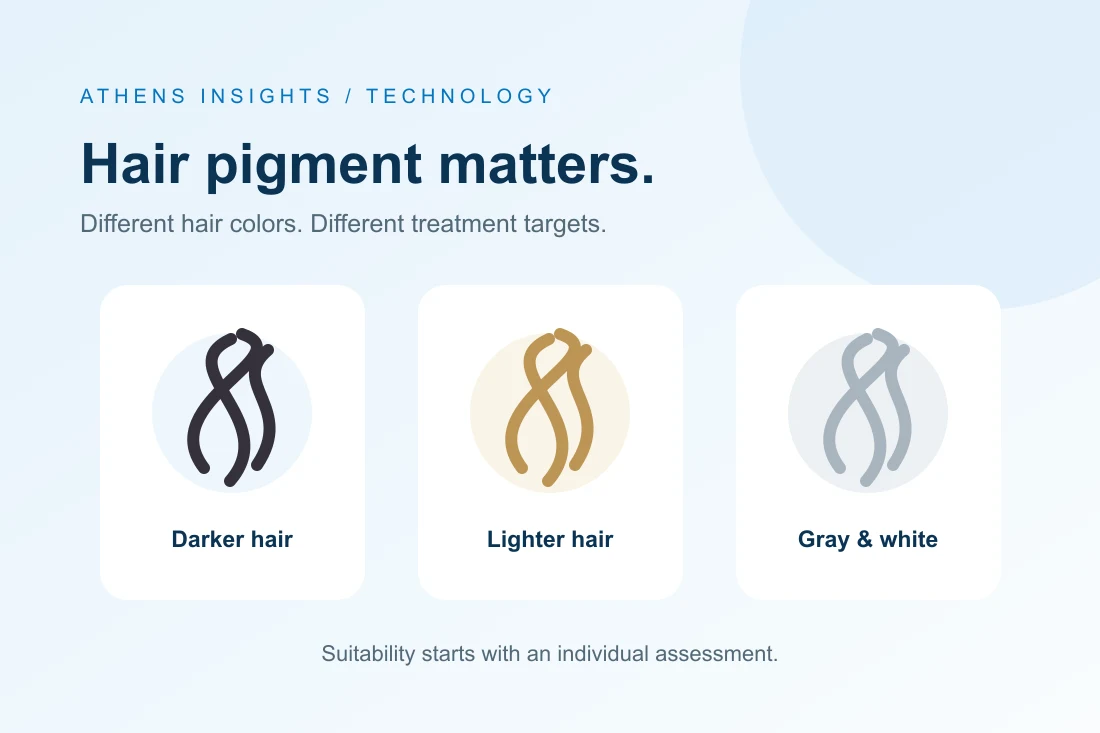
Laser hair removal depends on suitable pigment in the hair. Dark hairs generally offer a better target than gray or white hairs, while blonde and red hairs can respond poorly. A consultation should assess the actual hairs in each area rather than promise that one device works equally well for every color.
Hair color is part of the mechanism
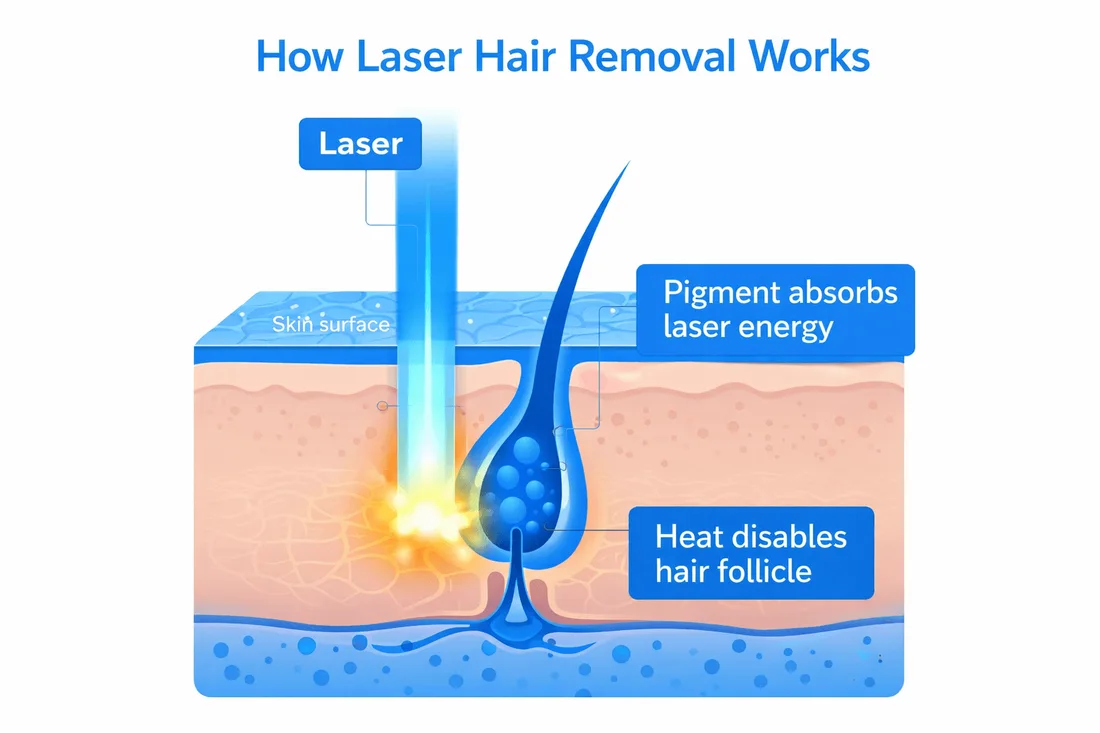
Laser treatment uses light absorbed by pigment in the hair to produce heat that affects the follicle. If there is little suitable pigment, there is less of the intended target. This is why a hair-removal laser is not simply a stronger version of a razor that works identically on every hair.
Our how laser hair removal works guide explains the process. Understanding that mechanism helps you recognize why changing the machine brand may not solve a fundamental mismatch between the treatment and the hair.
Gray and white hairs deserve a frank discussion
Gray and white hairs generally do not provide the same useful pigment target as dark hairs. Before purchasing a course, ask the provider to identify whether the hairs you want removed are actually suitable. Do not accept a broad “all hair types” claim without discussing this limitation.
If a proposed area is mostly light hair, ask whether another method should be considered. The useful outcome of a consultation may be deciding against laser for that particular target. That can save time and money compared with repeatedly treating poorly suited hairs.
Blonde and red hair are not one uniform category
People describe hair colors differently, and a single area can contain a mixture. Fine pale hair and coarse darker strands within the same region may not have the same treatment potential. An in-person assessment is more informative than selecting a color label on a booking form.
Ask which hairs the practitioner expects may respond and which may remain. Avoid interpreting a cautious assessment as an invitation to demand higher settings. More energy is not automatically the answer to a weak pigment target and can introduce additional risk.
Mixed-color hair changes what success looks like
Imagine an area containing coarse dark hairs and scattered white ones. If suitable dark hairs are reduced, the light hairs may become more noticeable simply because the surrounding growth has changed. That does not necessarily mean new white hairs were created by treatment.
Discuss this possibility before starting, especially for a beard, chin, or another area where appearance matters closely. Define whether reducing the dark component would still be worthwhile for you and what options might remain for isolated light hairs afterward.
Skin tone and hair color are different questions
A device suited to darker skin does not automatically treat white hair effectively. Skin matching concerns protection of the surrounding skin; hair-color suitability concerns the target itself. Both must be considered in the same treatment plan.
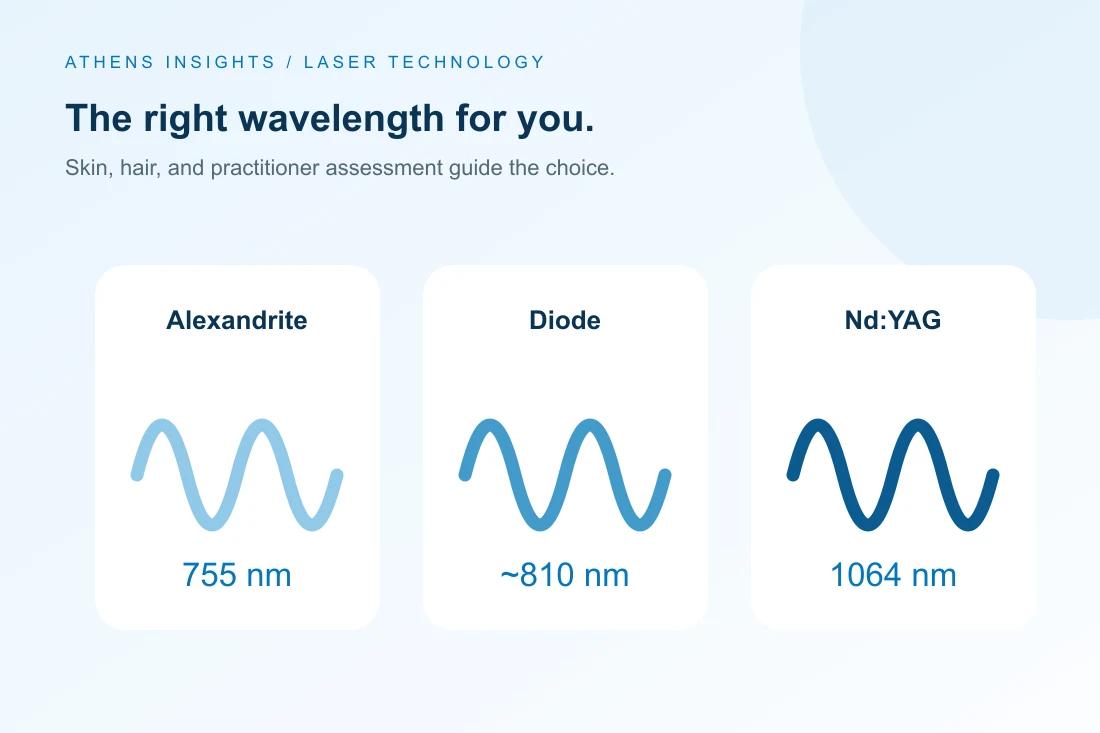
Our laser-type comparison explains the main technologies. Ask the provider to connect the proposed wavelength with both your skin and your hair rather than treating “all skin tones” as a promise about all hair colors.
Can dyeing hair make it suitable?
Do not assume coloring the visible hair will create the right target inside the follicle. Tell the practitioner about any dye or product applied to the area, and do not experiment with a coloring routine to prepare for laser. Suitability needs to be assessed based on the actual treatment mechanism.
The same caution applies to products advertised online as making light hair respond to laser. Ask for a professional assessment rather than adding an unverified product to your skin before a session. A marketing explanation is not a substitute for evidence and individual screening.
When to ask about electrolysis
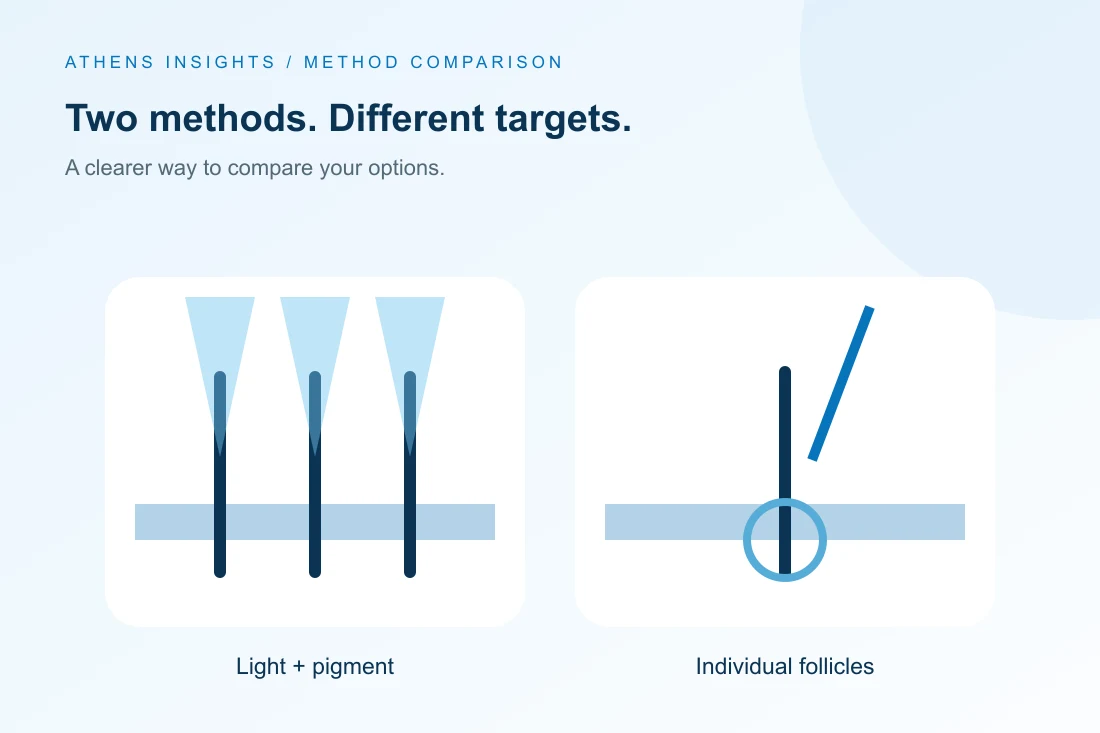
Electrolysis uses a different approach that does not rely on the same pigment target. It may be worth discussing for suitable light hairs, particularly when the problem involves individual follicles rather than a large area of dense dark growth. The provider must still assess the area, commitment, risks, and goals.
Read the laser versus electrolysis comparison for consultation questions. Mentioning an alternative here does not mean Athens offers it, and a comparison article cannot determine which method is right for you without assessment.
Spend on a realistic target
Before paying for a package, ask what improvement is plausible, which hairs may remain, and how progress will be reviewed. A clear limitation is more valuable than a confident promise that cannot be explained. Keep the written plan and revisit it if the remaining hair no longer looks like the original target.
Athens offers free consultations in Allen using Alexandrite and Nd:YAG technology. Bring your actual treatment goals and any previous results. The aim is an honest discussion of suitability so you can make a decision based on your hair—not an advertisement's broadest claim.
Sources & further reading
Clinical background for this guide. These organizations do not endorse Athens. Individual advice from your treating professional takes priority.
General education—not an individual diagnosis, treatment clearance, or substitute for medical advice. No independent clinical review is claimed. For personal suitability, speak with your treating professional.