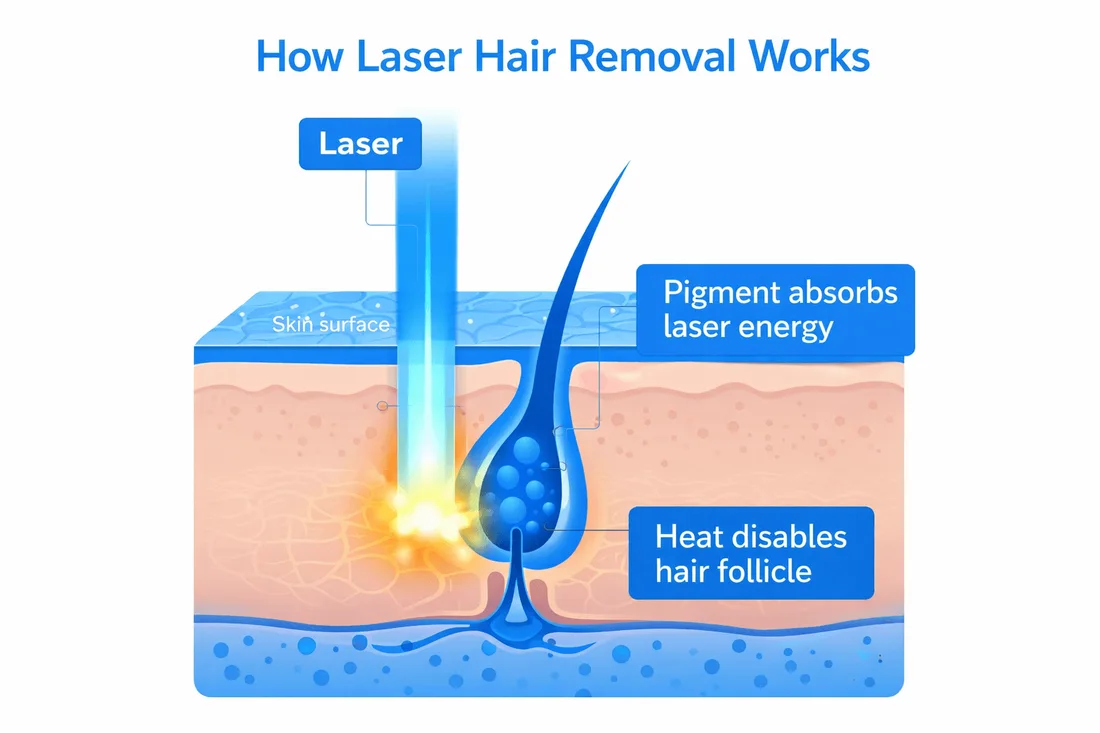
Laser hair removal uses light absorbed by pigment in suitable hairs. That energy becomes heat and damages structures involved in hair growth. Because hair grows in cycles and pigment varies, results require a personalized series rather than a single universal treatment.
From light to a hair follicle
A useful way to understand the process is to separate the surface of the skin from the follicle beneath it. Shaving removes the visible shaft above the skin. Laser treatment is intended to affect the follicle through energy absorbed by the hair's pigment, which is why hair and skin characteristics matter during assessment.
The purpose is lasting hair reduction, not simply trimming what you can see that day. This also explains why a device that flashes light is not automatically suitable for every person or every patch of hair. The wavelength, settings, cooling, and practitioner judgment all contribute to the treatment plan.
Why dark hair is often a better target
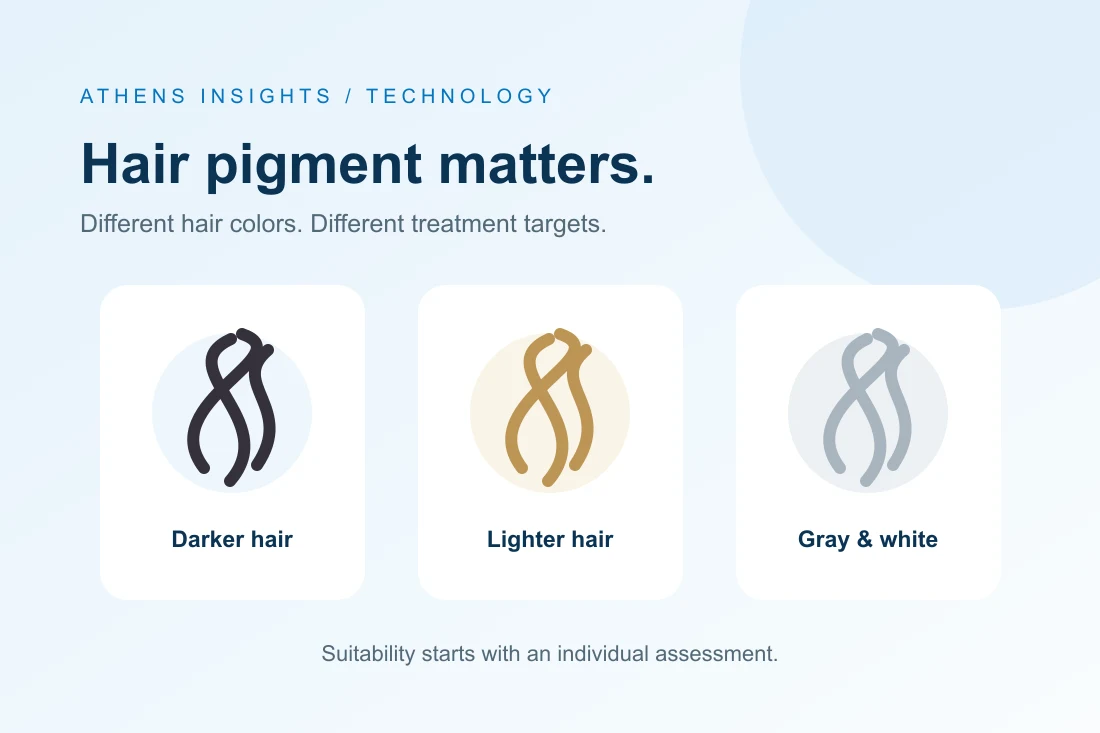
Pigment gives the laser something to target. Darker hairs generally offer more of that target than white or gray hairs. Blonde and red hairs can also respond poorly. Having dark hair in one area does not prove that finer or lighter hairs elsewhere will respond in the same way.
During a consultation, identify the actual hairs you want reduced. “My hair is brown” is less useful than showing the mixture of colors and textures in the proposed area. Our hair-color guide explains why mixed hair can require a more selective strategy.
Skin pigment is part of the assessment too
The practitioner must consider pigment in the skin as well as pigment in the hair. That is one reason recent tanning matters and why matching a device to skin tone is important. Naturally darker skin does not automatically exclude treatment, but it calls for appropriate technology and experience.
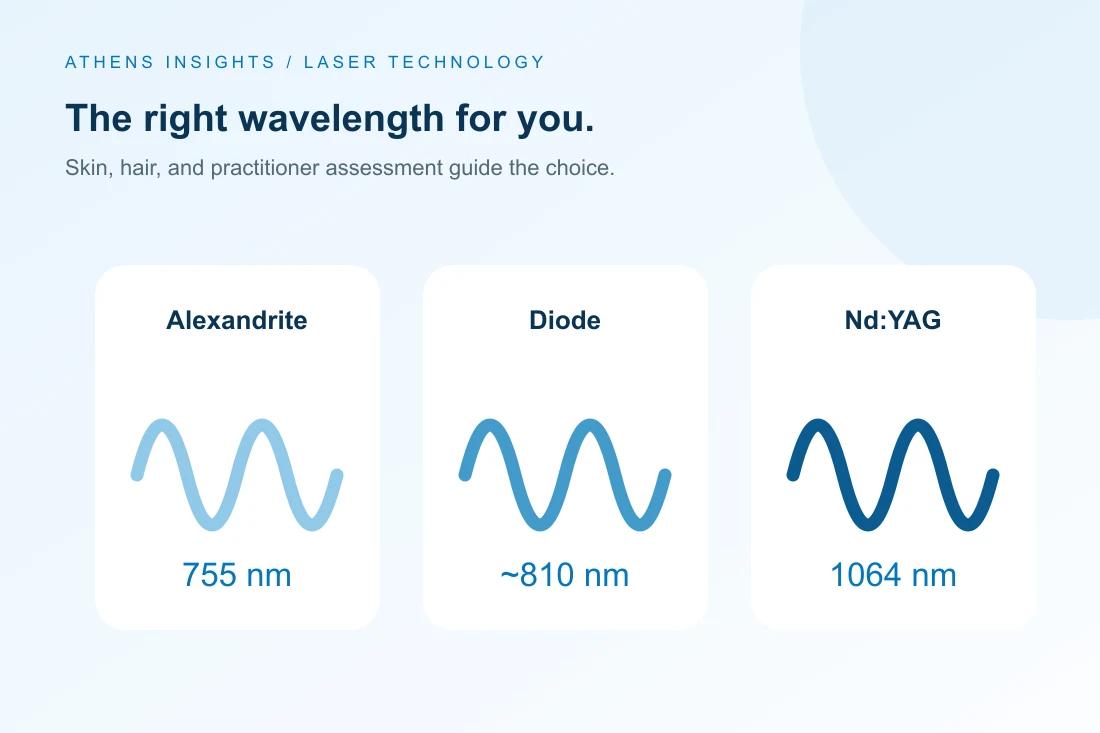
Avoid choosing a provider solely because an advertisement says a machine is “the strongest.” You want a suitable treatment, not the highest possible energy. Our laser-type comparison explains Alexandrite, diode, and Nd:YAG at a practical level, including why there is no single best choice for everyone.
Why treatment happens in a series
Hairs move through different growth phases. A session does not encounter every follicle in the same useful stage, so appointments are spread over time. The schedule should reflect the area, response, and provider's assessment rather than a belief that faster repetition necessarily produces faster results.
Ask how your progress will be evaluated. A good discussion distinguishes early shedding from long-term reduction and explains what would cause the schedule to change. Read how many sessions you may need before comparing package sizes or planning around an event.
What happens during an appointment?
The provider should review relevant changes since your last visit, confirm the area, and prepare the skin according to the treatment protocol. Appropriate eye protection is essential. You should know how to ask for a pause and what sensations are expected before treatment begins.
The device is applied across the planned area with suitable settings and cooling. Exact equipment and steps vary. Do not judge the quality of an appointment by copying a video from a different clinic: treatment details can reasonably differ with the device, area, and person being treated.
What happens afterward?
Temporary redness or sensitivity can occur. Follow the clinic's aftercare instructions and contact it if symptoms are concerning, severe, or worsening. Treated hairs may shed over time; do not pick, pull, or aggressively exfoliate in an attempt to speed the process.
The next appointment is a chance to discuss the response, not simply repeat the previous session without review. Tell the provider about unusual reactions, new products, medications, tanning, or changes in the hair pattern. These details help determine whether the original plan still fits.
A mechanism is not a guarantee
Understanding the science helps you ask better questions, but it cannot predict an exact result from a description alone. A machine name does not replace assessment. Neither does a photograph of someone else's outcome. Your goals, hair characteristics, skin response, and longer-term growth all need consideration.
Athens Laser Hair Removal uses the Cynosure Apogee Elite system with Alexandrite and Nd:YAG technology. Ask which approach would be considered for your skin and hair during a free consultation in Allen. For treatment areas and practical next steps, visit the Athens laser hair removal service page.
Sources & further reading
Clinical background for this guide. These organizations do not endorse Athens. Individual advice from your treating professional takes priority.
General education—not an individual diagnosis, treatment clearance, or substitute for medical advice. No independent clinical review is claimed. For personal suitability, speak with your treating professional.