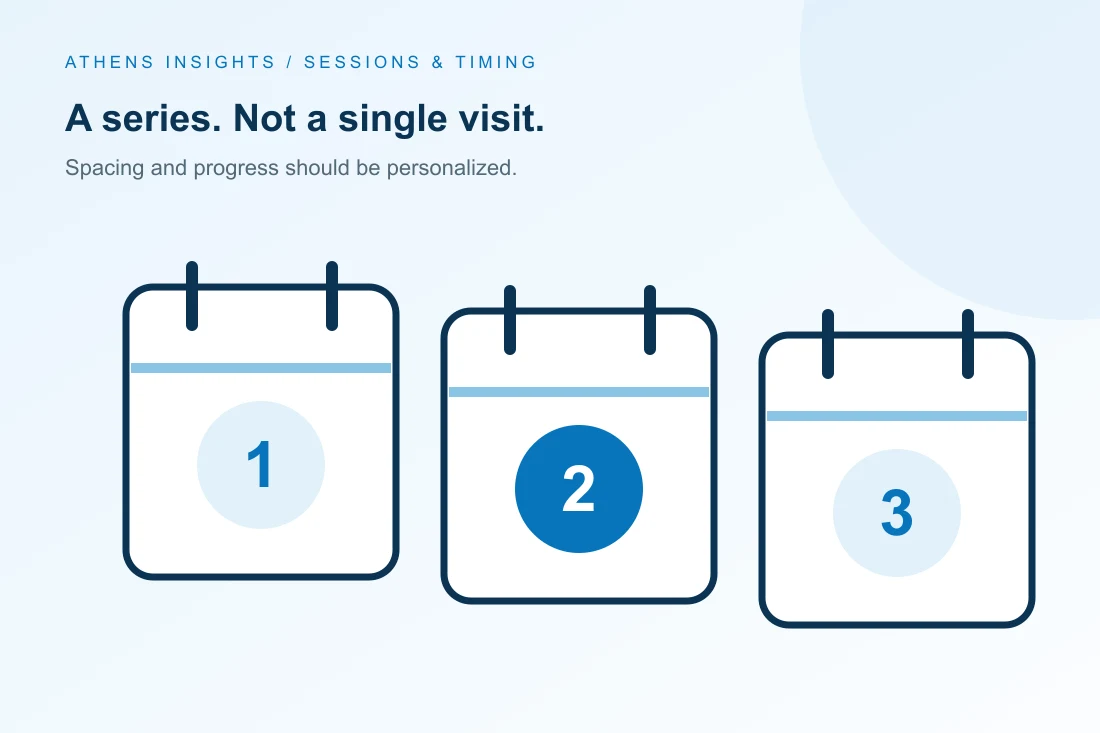
Laser hair removal usually requires a series of appointments because hairs are not all in the same growth phase at once. The number and spacing of visits depend on the area, hair, skin, and response. An initial estimate is useful, but it is not a guaranteed finish line.
Why one appointment is not the whole treatment
The hair you can see on the surface is only part of the picture. Follicles move through growth cycles, and treatment works best on suitable hairs during the active growth phase. Scheduling a series creates opportunities to treat different groups of hairs as they become appropriate targets.
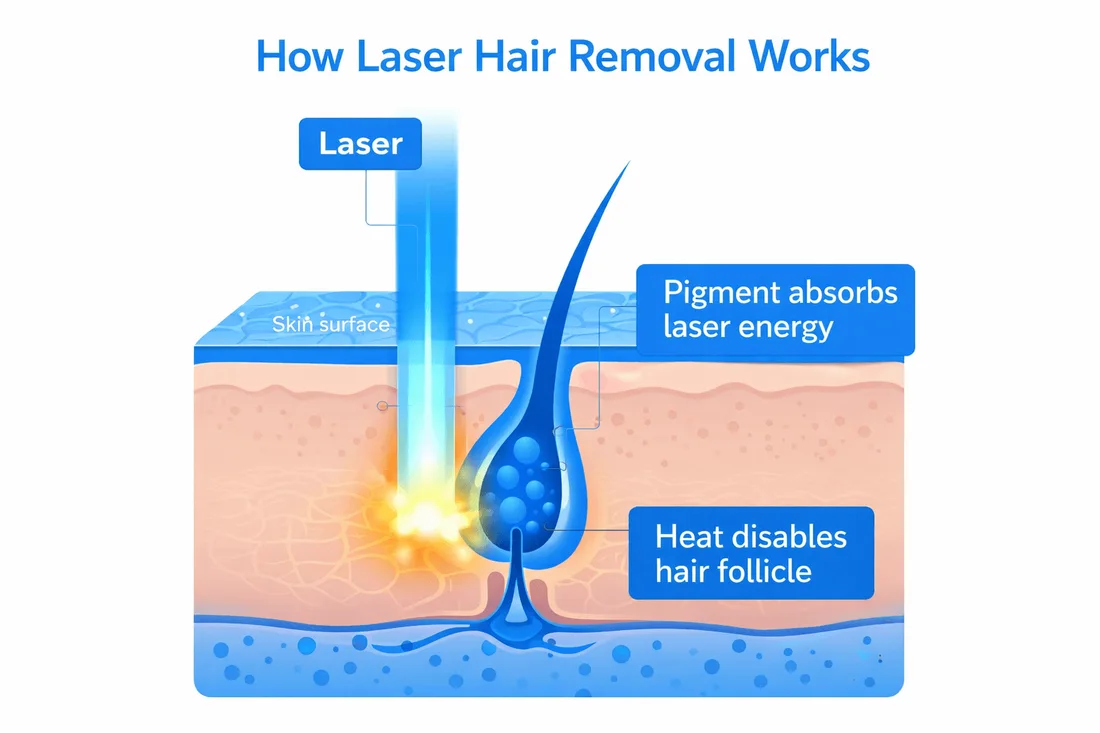
That does not mean every visible hair must disappear immediately after a session. Shedding, regrowth, and changing density need to be assessed over time. Our guide to how laser hair removal works explains the mechanism without treating a single appointment as an instant transformation.
What changes the number of sessions?
Start with the treatment area and your goal. Reducing dense back hair, refining a beard line, and treating upper-lip hair are not identical projects. The provider should also assess hair color and texture, skin tone, prior treatment, and factors that could affect future growth.
Hormonal influences can complicate expectations, especially for facial hair. Someone with ongoing hormonal growth may require a different long-term approach from someone treating a stable area of coarse body hair. If this applies to you, read the PCOS and hormonal hair guide and discuss medical evaluation when appropriate.
Why spacing is part of the plan
More frequent appointments are not automatically more effective. The schedule should make sense for the area and your response, rather than simply filling a calendar. Ask why a particular interval is being recommended and what changes would justify moving the next appointment.
If you have a trip, new medication, illness, or significant sun exposure, contact the clinic before your visit. An interrupted schedule should be discussed openly. Do not try to make up for a postponed appointment by requesting unusually close sessions or treating the same area at home between visits.
How to judge progress fairly
Choose a few useful measures at the beginning. How often do you shave? Which patches bother you most? Are you aiming for overall reduction or a defined boundary? These observations are more helpful than trying to count every hair after each appointment.
If you document progress with photographs, use similar lighting, distance, and time since shaving. Keep images private and obtain the provider's guidance about useful timing. A photograph taken immediately after shaving cannot be compared fairly with one taken after several days of growth.
What if you are not seeing the expected change?
Ask for a review rather than assuming you simply need an unlimited number of visits. Useful questions include whether the remaining hair is still a suitable target, whether the treatment area has changed, and whether a health or medication change deserves attention. Bring the dates of previous appointments and any relevant preparation difficulties.
The answer may involve adjusting expectations or discussing another approach. More treatment is not automatically better when the remaining hair is very light, fine, or poorly suited to laser. A clear explanation of the remaining target matters more than a vague promise to keep going.
Packages and clinical expectations are different
A package containing a fixed number of appointments is a purchasing arrangement. It does not establish the exact number your body will need. Ask what happens if you respond sooner than expected, need additional visits, or must pause for health reasons.
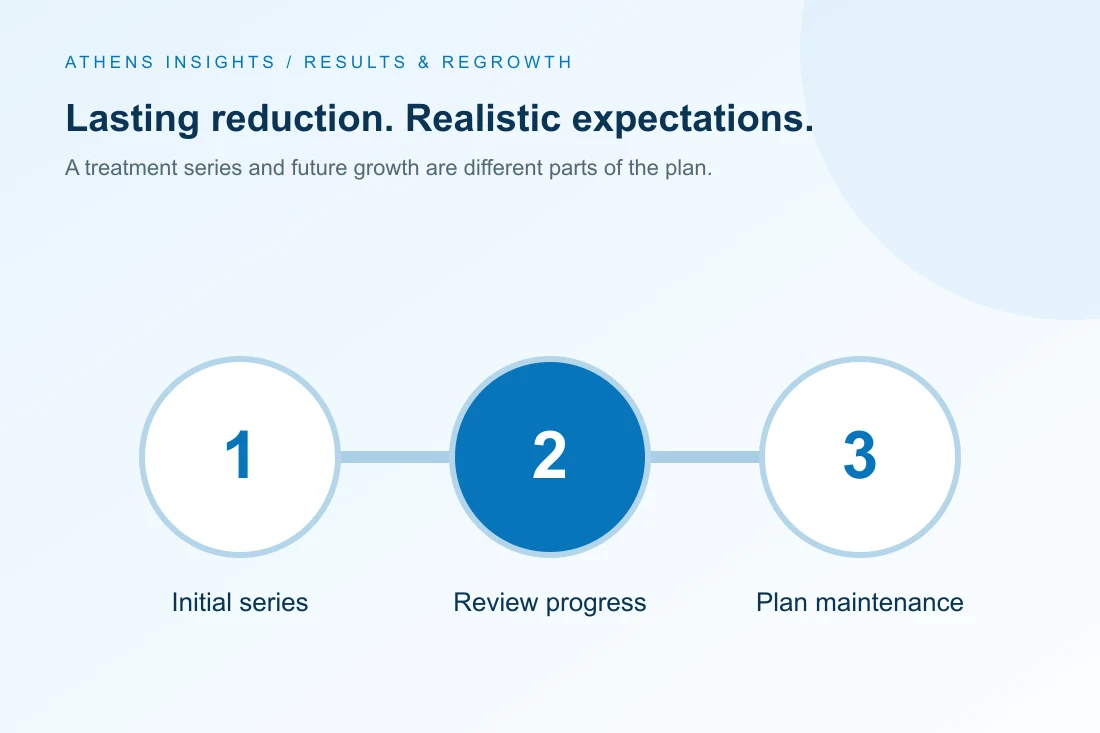
Ask separately about maintenance. An initial series and later touch-ups serve different planning purposes. Our permanent-results guide explains why lasting reduction can still coexist with some future growth. Keep the written package terms alongside your treatment plan so neither conversation is lost.
Arrive with a realistic timeline
If you are preparing for a wedding, vacation, or athletic season, tell the provider early. Avoid choosing a start date based on a promise of being completely hair-free by a specific event. There may be reasons to postpone treatment, and your response cannot be guaranteed against a deadline.
Athens Laser Hair Removal offers free consultations at its Allen clinic. Bring your target areas, timing constraints, previous laser history, and questions about maintenance. A useful consultation should leave you understanding the proposed sequence, the reasons behind it, and how progress will be reviewed—not just a number of sessions to purchase.
Sources & further reading
Clinical background for this guide. These organizations do not endorse Athens. Individual advice from your treating professional takes priority.
General education—not an individual diagnosis, treatment clearance, or substitute for medical advice. No independent clinical review is claimed. For personal suitability, speak with your treating professional.