Laser hair removal can produce lasting hair reduction, but it does not guarantee that every hair will disappear forever. Results depend on your hair, skin, treatment area, and individual response. Some people need maintenance appointments, particularly where hormonal changes continue to influence growth.
What “permanent” should mean in a consultation
The most useful discussion starts with a concrete goal. Do you want to shave less often? Reduce dense back hair? Address recurring chin hair? Those goals are more useful than an undefined promise of being completely hair-free. Ask the provider what improvement is realistic for your specific area and what would count as a successful course.
Laser treatment affects suitable hairs through their follicles. It does not switch off every future influence on hair growth. This distinction explains how someone can experience a meaningful, long-lasting reduction and still notice some hair later. Our guide to how laser works explains the process in everyday language.
Why a series of appointments matters
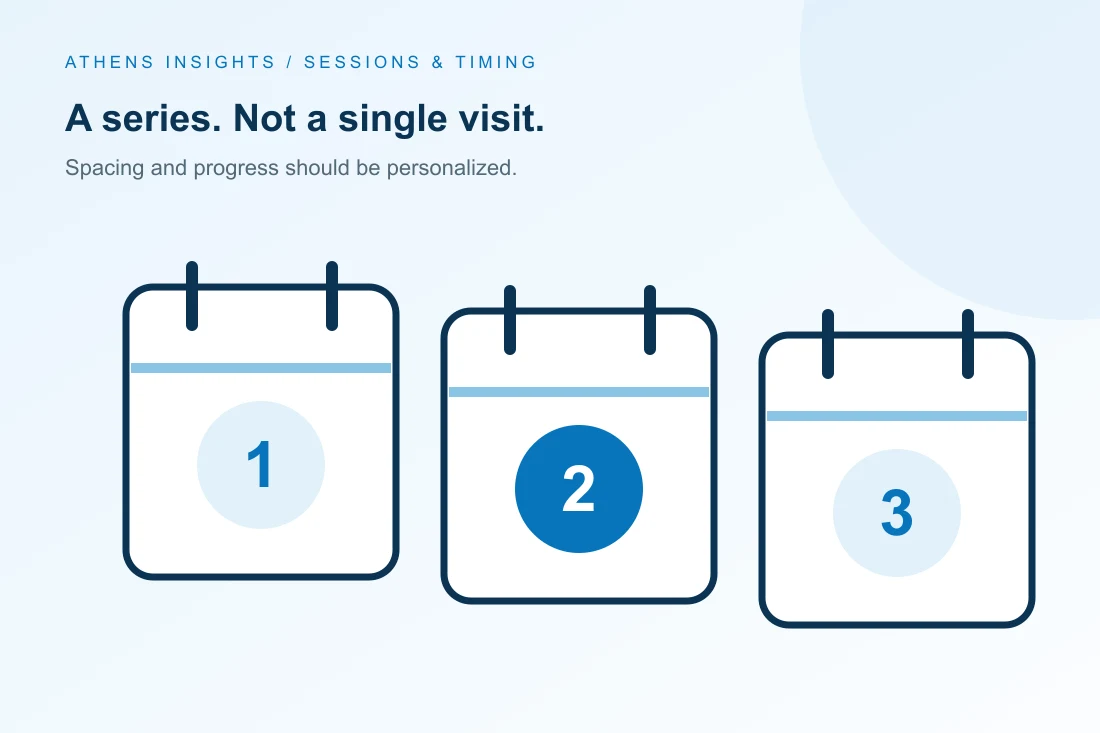
Hairs in the same treatment area are not all at the same point in their growth cycle. A series gives the provider more opportunities to treat responsive hair over time. One good early result does not show how an entire course will turn out, and one patch of remaining growth does not by itself prove that treatment has failed.
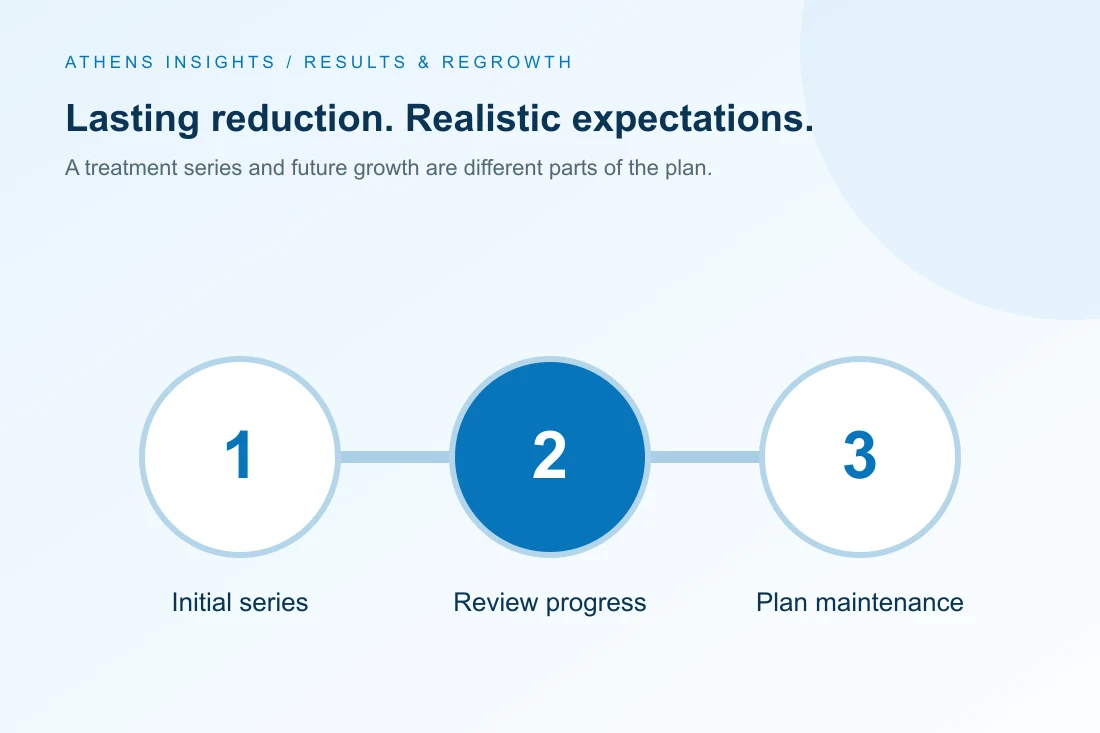
The plan should be reviewed as you progress. Tell the provider when you last shaved and what you have noticed between appointments. Consistent photographs, taken with the same lighting and similar hair length, can make changes easier to assess than memory alone. Any clinical progress photographs should be handled with your consent and respect for your privacy.
Shedding is different from later regrowth
Hair does not necessarily disappear immediately after a visit. Treated hairs may shed over the following days or weeks. This can look confusing if you expected smooth skin the moment the appointment ended. Pulling or aggressively scrubbing the hair is not a way to improve the result.
Later growth deserves a different conversation. Notice whether the remaining hair is concentrated in certain patches, whether it is finer, and whether your shaving frequency has changed. Bring those observations to your provider. The aftercare guide covers caring for the skin during the period immediately after treatment.
Hormones can change the long-term plan
Facial and other hormonally influenced hair may require a longer view. Laser can reduce suitable hair that is present, while hormonal conditions can continue to drive unwanted growth. That means hair reduction and management of an underlying condition are related but separate parts of care.
If you have PCOS or another hormonal concern, discuss both the cosmetic goal and your medical care. Sudden or rapidly changing hair growth is worth discussing with a healthcare professional. Do not assume a larger laser package resolves the cause. Our PCOS and hormonal-hair guide outlines questions for a coordinated plan.
What to ask about maintenance
Ask how the provider decides that a touch-up is useful. There should be a reason based on the type of hair, your goal, and the response so far. Repeating an appointment simply because a calendar says so is not a substitute for assessing the area.
Find out how maintenance is priced and whether it is included in any package you are considering. If a package is described as unlimited or lifetime, read the terms carefully. The name alone does not explain eligibility, scheduling, covered areas, or what happens if the business or your circumstances change.
Set a useful checkpoint
Before starting, choose a few practical measures to discuss later: shaving frequency, the density of a troublesome patch, or the time spent managing unwanted hair. These observations help you judge whether the treatment is delivering something you value. They also give the provider better information when adjusting a plan.
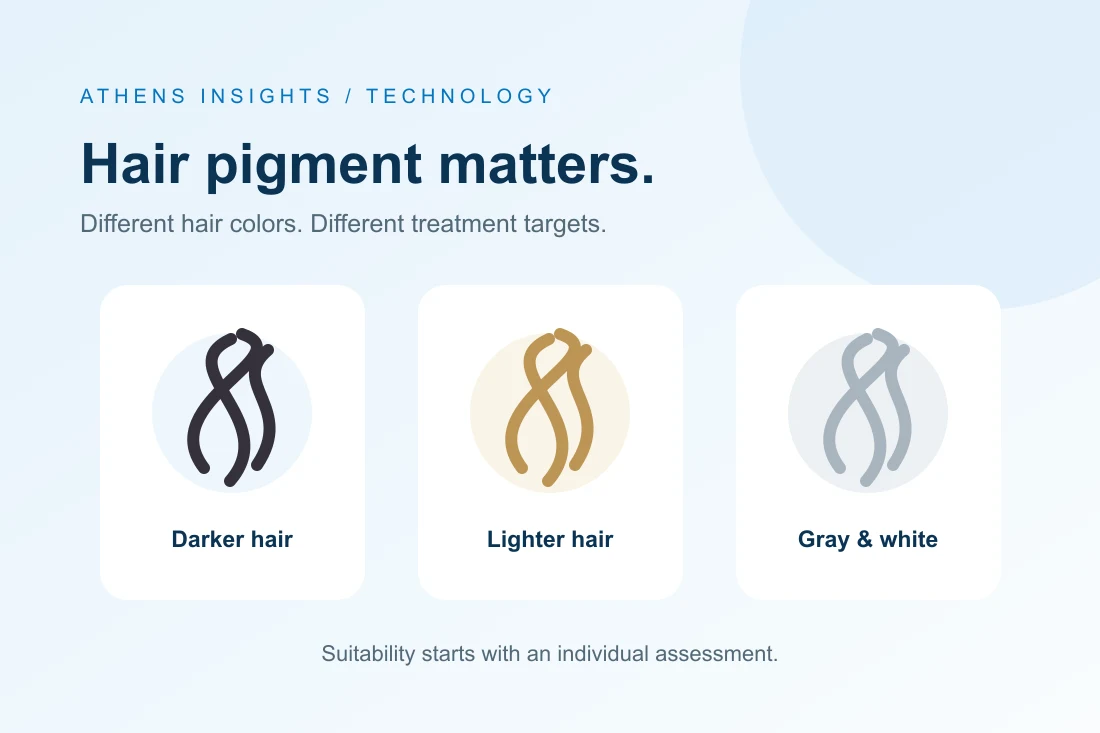
Be cautious about comparing your result with a friend's treatment on a different body area. Skin, hair color, hormonal factors, and treatment histories can differ. A testimonial or photograph can illustrate someone's experience, but it cannot promise yours.
At Athens, begin with a free consultation about laser hair removal in Allen. Ask for realistic expectations, a proposed course, and an explanation of possible maintenance. Clear expectations make it easier to recognize meaningful improvement without treating every remaining hair as a disappointment.
Sources & further reading
Clinical background for this guide. These organizations do not endorse Athens. Individual advice from your treating professional takes priority.
General education—not an individual diagnosis, treatment clearance, or substitute for medical advice. No independent clinical review is claimed. For personal suitability, speak with your treating professional.